A research project exploring connection, learning, and shared experience during menopause
Menopause is often experienced in isolation, even though it is a shared life transition for many people. This research project explores how a virtual peer support program, shaped by lived experience and research evidence, can create meaningful connection, reduce isolation, and support people navigating perimenopause, menopause, and postmenopause.
REB#26-112 Approved
About the Project
This study is co-designing and testing a virtual menopause peer support program developed with people who have lived experience of menopause and subject matter expertise.
The program includes:
- a structured peer support model
- training for peer facilitators with lived experience
- a pilot group to explore feasibility, acceptability, and impact
The goal is to develop an evidence-informed, inclusive, and adaptable model that can be used in community and health settings.
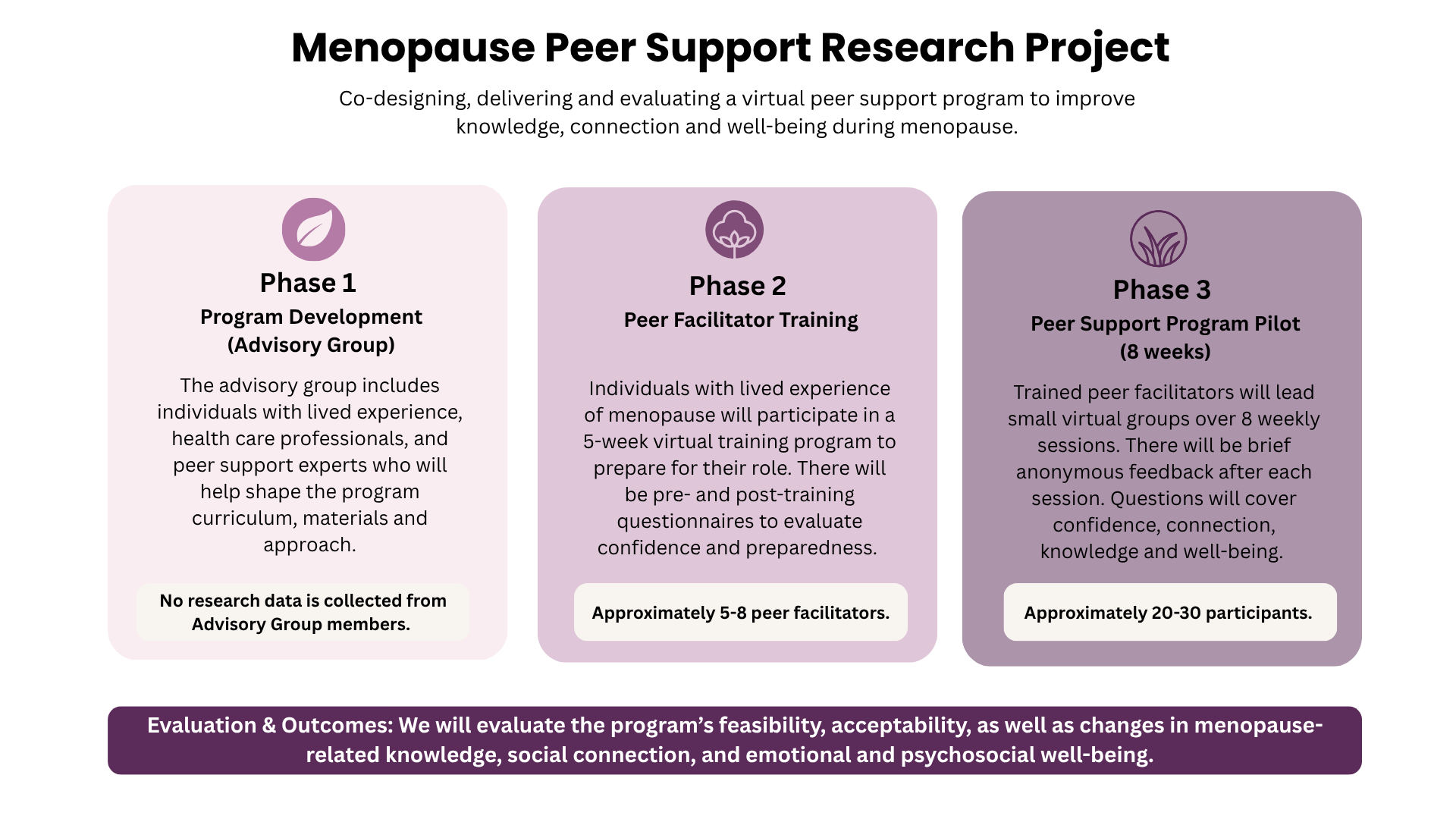
What the Virtual Menopause Support Program Will Look Like
Participants will join a 8-week virtual peer support group facilitated by trained peer leaders with lived experience of menopause.
The group provides:
- a supportive and confidential space to share experiences
- opportunities to learn from others navigating similar transitions
- discussion about menopause experiences and available supports
- connection with others across different backgrounds and locations
This is a non-clinical, peer-led program focused on connection, learning, and shared experience.
Who Can Participate
This study is open to individuals who:
- are 18 years of age or older
- are experiencing perimenopause, menopause, or postmenopause
- are able to participate in a virtual group setting
We welcome participants from diverse backgrounds, including rural communities and individuals of different genders and identities (cisgender women, transgender men, non-binary, and gender-diverse people).
Want to Participate?
I am recruiting adults aged 45–55 with lived experience of perimenopause or menopause for a free, 8-week virtual peer support group.
Sessions run weekly (1 hour), in a confidential, non-clinical space to connect, share experiences, and learn about menopause and available supports.
FAQs
What is this study about?
This study is examining the development and pilot testing of a virtual menopause peer support program that is shaped by lived experience and research evidence.
Who can participate?
Adults aged 18 and older who have lived experience of perimenopause, menopause, or postmenopause and can take part in an online group setting.
Is this a treatment program?
No. This is a non-clinical peer support program focused on connection, shared learning, and support.
What does REB approved mean?
It means the study has been reviewed by a Research Ethics Board to make sure it meets ethical standards for research with people.
Principal Investigator
Alyssa Blais, Master’s Student, Applied Health Services Research, Saint Mary’s University Email: alyssa.blais@smu.ca
Faculty Supervisor
Dr. Michele Byers, Faculty of Arts, Women and Gender Studies, Saint Mary’s University Email: michele.byers@smu.ca